
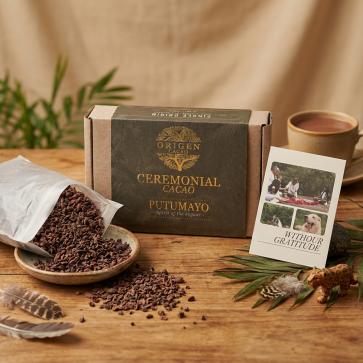
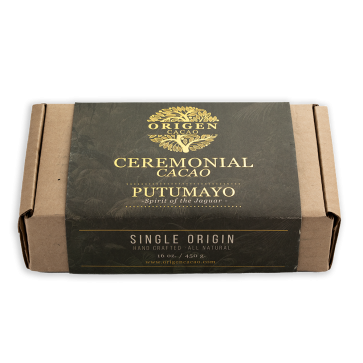
Ceremonial Cacao – Putumayo


€44,95
Pure ceremonial-grade cacao from Putumayo, Colombia. Hand-harvested, sun-dried, and stone-ground to preserve its powerful heart-opening properties. Experience 3,000 years of sacred tradition in every cup.
This 450g raw cacao block provides approximately 15 ceremonial servings of sustained, gentle energy and emotional clarity—without the jitters or crash of coffee. Rich, complex flavor with earthy and subtle fruity notes. Perfect for meditation, spiritual practice, and conscious ceremony.
The Food of the Gods – Ceremonial Cacao from Putumayo
For thousands of years, cacao (Theobroma cacao) has held a special place in the cultures of Central and South America. Revered as the “Food of the Gods”, cacao was valued by ancient Olmec, Maya and Aztec communities and incorporated into ceremonies, celebrations and traditional practices.
Today, that heritage continues in Putumayo, southwestern Colombia, where Indigenous communities including the Inga and Cofán have cultivated cacao alongside other crops for generations. This is more than a chocolate product. It is a traditional cacao preparation designed to be enjoyed slowly, intentionally and mindfully.
Where Our Putumayo Cacao Comes From
Our cacao originates in the fertile highlands of Putumayo, Colombia, where it is cultivated at approximately 800–1,400 metres above sea level. The region combines a warm tropical climate, fertile soils and long-established agricultural knowledge.
Rather than relying solely on large-scale monoculture, local cultivation traditionally integrates cacao with other plants, helping maintain a diverse growing environment and supporting the surrounding ecosystem.
The cacao beans are harvested by hand when fully mature. Following harvest, they are fermented and naturally dried in the sun before being stone-ground into a smooth cacao mass. The beans are not roasted, allowing their characteristic aroma, flavour and naturally occurring constituents to remain prominent.
Each 450 g block represents the work of small-scale growers in Putumayo and their commitment to traditional cultivation methods.
What Makes Ceremonial Cacao Special?
Ceremonial cacao is valued for its rich flavour, natural cacao butter content and naturally occurring plant compounds. Unlike highly processed chocolate products, traditional cacao preparations generally contain a much greater proportion of the original cacao material.
One of cacao’s naturally occurring methylxanthines is theobromine, alongside smaller amounts of caffeine. Theobromine has a different physiological profile from caffeine, while cacao also contains naturally occurring flavonoids and other polyphenolic compounds.
The precise composition of cacao varies according to the variety, growing conditions, fermentation, processing and serving size. For this reason, effects should not be assumed to be identical between different cacao products.
EU food marketing rules require health claims to be scientifically substantiated and authorised before they are used in commercial communications.
Traditional and Cultural Significance
Cacao has played an important role in numerous Mesoamerican traditions. Historical preparations were often served as thick beverages and could include ingredients such as chilli, spices, herbs or other local botanicals. Traditionally, cacao beverages were associated with:
- Ceremonial gatherings and spiritual observances
- Weddings and community celebrations
- Hospitality and social occasions
- Traditional healing practices
- Meditation, reflection and personal rituals
- Important cultural and seasonal events
The preparation itself was often considered part of the experience. Cacao was carefully prepared, shared and consumed with attention and intention.
Modern ceremonial cacao practices draw inspiration from these historical traditions while adapting preparation methods for contemporary use.
Who May Enjoy Ceremonial Cacao?
Ceremonial cacao can be incorporated into a range of everyday rituals, including:
- Morning routines and mindful starts to the day
- Meditation and quiet reflection
- Creative sessions
- Personal intention-setting
- Yoga and mindfulness practices
- Social gatherings and cacao ceremonies
- Evening relaxation rituals
Rather than treating cacao simply as a quick beverage, many people enjoy preparing it slowly and making the process itself part of their routine.
How to Prepare Ceremonial Cacao
Basic Serving
Ingredients:
- 25–40 g chopped ceremonial cacao
- 200–250 ml hot water, plant-based milk or herbal infusion
- Optional cinnamon, cardamom, ginger, chilli, sea salt, honey or maple syrup
Preparation Method
- Chop the cacao block into small pieces so that it melts evenly.
- Warm your chosen liquid gently without bringing it to a vigorous boil.
- Add the cacao and whisk continuously until smooth and creamy.
- Add spices or natural sweeteners according to your preference.
- Pour into your preferred cup or ceremonial vessel.
- Allow it to cool slightly before drinking.
- Sip slowly and savour the aroma, texture and naturally rich cacao flavour.
For a lighter serving, simply reduce the quantity of cacao used.
Serving Suggestions
There are many ways to personalise a ceremonial cacao drink:
- Cinnamon and cardamom for a warm, aromatic profile
- Ginger for a fresh, spicy character
- Chilli for additional heat
- Rose petals or rose infusion for a floral variation
- Sea salt to enhance the natural chocolate notes
- Honey or maple syrup for gentle sweetness
- Plant-based milk for a creamier texture
Cacao can also be combined with smoothies, porridge or other recipes where its deep chocolate flavour works well.
The Cacao Experience
Everyone responds differently to cacao, and the experience can depend on the serving size, individual sensitivity, food intake and the natural composition of the cacao.
Because cacao naturally contains caffeine and theobromine, some people may experience increased alertness or stimulation. Others simply appreciate its rich flavour, warmth and satisfying texture.
Caffeine content can vary substantially between cacao products. EFSA notes that cocoa is a natural dietary source of caffeine and that concentrations can vary depending on the type and amount of cocoa used.
For this reason, it is sensible to begin with a modest serving, particularly if you are sensitive to caffeinated foods.
Important Safety Information
Ceremonial cacao is a food product, but it contains naturally occurring stimulants. Consider your individual circumstances before consuming it.
Take particular care if you:
- Are sensitive to caffeine or other naturally occurring stimulants
- Have been advised to restrict caffeine or stimulant-containing foods
- Have a cardiovascular condition
- Are taking prescription medicines or supplements that may interact with caffeine or other cacao constituents
- Are pregnant or breastfeeding and have been advised to limit stimulant intake
If you have a medical condition or regularly take medication, speak with a qualified healthcare professional before introducing concentrated cacao servings into your routine.
Avoid consuming excessive quantities. Large servings may cause unwanted effects such as digestive discomfort, headaches, restlessness or difficulty sleeping in sensitive individuals.
Cacao also contains caffeine, and EFSA has established safety guidance for caffeine intake in healthy adults; individual tolerance can vary.
Important: This product should not be presented as a treatment or cure for a medical condition. In the EU, food health claims must meet applicable evidence and authorisation requirements.
Cacao and Pets
Keep cacao products away from pets. Cacao and chocolate contain methylxanthines that can be harmful to animals, particularly dogs. Store the product securely and do not allow pets to consume it.
Storage
Store the cacao block in a cool, dry location away from direct sunlight, heat and moisture.
A sealed container kept in a cool kitchen cupboard is suitable for everyday storage. Avoid prolonged exposure to high temperatures, as heat can soften the natural cacao butter and alter the texture.
For best quality, always keep the packaging properly sealed when the cacao is not being used.
Our Commitment to Quality and Sustainability
Putumayo is one of Colombia’s biodiverse regions, and traditional cacao cultivation forms part of a wider agricultural landscape.
Our cacao is sourced from smallholder growers who use established harvesting and processing practices, including:
- Hand-picking mature cacao pods
- Traditional fermentation
- Natural sun-drying
- Small-scale processing
- Cultivation alongside other plant species
- Respect for local agricultural knowledge
Choosing traditionally produced cacao helps maintain a connection between the finished product and the growers, landscapes and communities responsible for producing it.
A Simple Way to Enjoy Cacao
Ceremonial cacao is ultimately about taking time to appreciate a traditional food in a more intentional way. Prepare a warm cup, choose your favourite spices, slow down and enjoy the naturally rich character of Putumayo cacao.
Whether incorporated into a morning ritual, meditation session, creative practice or shared gathering, this cacao offers a simple way to bring a little more attention and enjoyment to your daily routine.
Be the first to review “Ceremonial Cacao – Putumayo”
Related products

Smart Supplements


Smart Supplements


Buy Magic Truffles
Reviews
There are no reviews yet.