
San Pedro and Peyote Cactus — Seeds, Grow Kits & Botanical Collection
Explore our San Pedro and Peyote Cactus collection at Magic Mushrooms Shop, featuring cactus seeds, grow kits and selected botanical products associated with some of the most historically significant cactus species from the Americas.
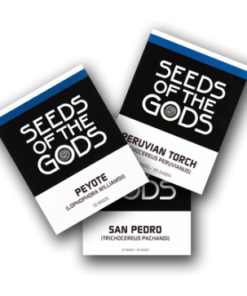
Our collection includes San Pedro (Echinopsis pachanoi), Peyote (Lophophora williamsii) and Peruvian Torch (Echinopsis peruviana), together with selected seed bundles and grow kits.
These products are presented primarily as botanical and cultivation products, allowing customers to explore unusual cactus species, their distinctive appearance, growing characteristics and cultural heritage. San Pedro and Peyote have particularly rich histories in the Americas.
San Pedro has longstanding traditional associations in parts of the Andes, while Peyote has a documented history of ceremonial use among Indigenous peoples of northern Mexico and the southwestern United States. Mescaline is the best-known psychoactive alkaloid associated with these cacti.


Explore Our San Pedro and Peyote Cactus Collection
Our cactus category brings together several forms of these distinctive plants, from individual seed packs to convenient grow kits and multi-species bundles. Depending on current availability, the collection may include:
- San Pedro Cactus (Echinopsis pachanoi)
- Peyote (Lophophora williamsii)
- Peruvian Torch (Echinopsis peruviana)
- San Pedro and Peyote grow kits
- Cactus seed bundles
- Selected botanical cactus products
Each product page provides the exact botanical name, format, quantity and available product information.
San Pedro Cactus — Echinopsis pachanoi
San Pedro (Echinopsis pachanoi) is a columnar cactus native to the Andes of South America. It is one of the best-known ornamental and ethnobotanical cactus species and has a long cultural history in parts of the Andean region.
The species is recognised for its tall, ribbed growth and relatively rapid development compared with some other slow-growing cacti.
Our collection may include San Pedro cactus seeds and grow kits, depending on current availability.
San Pedro has a documented history of traditional religious and medicinal use in parts of South America extending back thousands of years.
San Pedro Cactus Seeds
San Pedro seeds provide a botanical starting point for customers interested in cultivating Echinopsis pachanoi. When comparing seed products, check:
- Botanical species
- Number of seeds supplied
- Seed packaging
- Cultivation information
- Current availability
- Applicable legal restrictions
The individual product page should always be consulted for the precise contents of each pack.
San Pedro Cactus Grow Kits
A San Pedro grow kit can provide a convenient introduction to cultivating this distinctive cactus species. Grow kits may contain seeds together with selected cultivation materials or instructions, depending on the specific product.
Before beginning cultivation, research the requirements of Echinopsis pachanoi, including suitable growing conditions, drainage, light and temperature.
Peyote Cactus — Lophophora williamsii
Peyote (Lophophora williamsii) is a small, slow-growing cactus native to parts of Mexico and the southern United States.
Unlike the tall columnar form of San Pedro, Peyote develops a compact, rounded appearance and is characterised by its distinctive spineless structure.
Peyote has significant cultural and religious importance in Indigenous traditions of North America. Its historical use is closely connected with ceremonial practices, making the plant an important subject within ethnobotanical and cultural research.
Peyote Cactus Seeds
Peyote seeds offer an opportunity to explore one of the most distinctive cactus species in botanical cultivation.
Because Lophophora williamsii is notably slow-growing, successful cultivation requires patience and appropriate environmental conditions. Always research:
- Germination requirements
- Soil composition
- Drainage
- Temperature
- Humidity
- Light requirements
- Local cultivation laws
Check the individual product page for the exact number of seeds supplied.
Peyote Cactus Grow Kits
Our collection may also feature Peyote cactus grow kits containing seeds and selected cultivation materials.
A grow kit can simplify the initial setup for customers who want to explore cactus cultivation without sourcing every component separately.
Always follow the product-specific cultivation instructions and verify that cultivation of Lophophora williamsii is permitted in your jurisdiction.
Peruvian Torch — Echinopsis peruviana
Peruvian Torch (Echinopsis peruviana) is another columnar cactus from the Andes and is closely associated with the broader group of ethnobotanically significant South American cacti.
Its tall growth form and ribbed appearance make it an interesting species for botanical collections.
Peruvian Torch may be available as seeds within our wider cactus collection. Product descriptions should be checked for the exact species, quantity and current availability.
San Pedro vs Peyote Cactus
Although San Pedro and Peyote are both associated with mescaline, they are botanically distinct species with very different appearances and growth characteristics.
| Feature | San Pedro | Peyote |
|---|---|---|
| Botanical name | Echinopsis pachanoi | Lophophora williamsii |
| Growth form | Tall, columnar cactus | Small, rounded cactus |
| Origin | Andes, South America | Mexico and southern USA |
| Growth characteristics | Generally faster-growing | Very slow-growing |
| Spines | Typically present on areoles | Characteristically spineless |
| Cultural history | Andean traditions | Indigenous North American traditions |
| Product formats | Seeds, grow kits | Seeds, grow kits |
The comparison is intended for botanical identification and cultivation purposes. It should not be interpreted as guidance for preparing or consuming psychoactive substances.
San Pedro, Peyote & Mescaline
San Pedro and Peyote are frequently discussed in connection with mescaline, a naturally occurring psychedelic alkaloid.
The European Union Drugs Agency lists mescaline among the classical psychedelic substances and notes its long history of ritualistic and religious use, particularly in Latin America.
Peyote is specifically recognised as a cactus containing mescaline, while San Pedro is also documented as containing the compound.
However, the presence of a naturally occurring compound does not mean that every cactus product is legally equivalent to purified mescaline. Laws may distinguish between a plant, seeds, preparations and controlled substances.
For this reason, customers should always consider the specific product and the law applicable in their country.
Cactus Seeds for Botanical Cultivation
Cactus seeds can be an interesting way to explore plant biodiversity and develop a collection of unusual species.
Compared with purchasing mature plants, seeds offer the opportunity to observe the plant throughout its development, from germination through early growth and eventual maturity.
Successful cultivation depends on the species and environmental conditions.
Important factors can include:
- Light exposure
- Temperature
- Humidity
- Growing medium
- Drainage
- Water management
- Container selection
- Germination conditions
- Long-term maintenance
San Pedro generally develops considerably faster than Peyote, while Peyote requires considerable patience because of its slow growth rate.
Research the specific requirements of the species before planting.
Cactus Grow Kits
A cactus grow kit can be a convenient option for beginners and experienced collectors who want a more complete cultivation setup.
Depending on the product, a kit may include:
- Cactus seeds
- Growing substrate
- Cultivation container
- Basic instructions
- Other cultivation materials
The contents vary between products, so always read the individual product description before ordering.
Grow kits are supplied according to their individual product classification and should only be used for purposes permitted by applicable law.
Cactus Seed Bundles
For customers interested in comparing several species, a cactus seed bundle can provide multiple varieties in one collection.
Our broader cactus selection may include combinations featuring:
- Peyote
- San Pedro
- Peruvian Torch
Multi-species packs can be useful for botanical collectors who want to explore differences in growth form, appearance and cultivation requirements.
Check the individual product description for the exact species and quantities included.
Why Botanical Names Matter
Cactus common names can vary between regions and historical sources. Scientific names provide a more reliable method of identifying the species being offered.
Some of the most important botanical names in this category include:
| Common Name | Botanical Name |
|---|---|
| San Pedro | Echinopsis pachanoi |
| Peyote | Lophophora williamsii |
| Peruvian Torch | Echinopsis peruviana |
When purchasing seeds or grow kits, always check the Latin botanical name rather than relying exclusively on a common name.
This is particularly important when ordering internationally, where common names and taxonomic classifications may differ.
San Pedro and Peyote Cactus Heritage
San Pedro and Peyote are not simply unusual ornamental plants. Both have extensive cultural histories.
San Pedro has been associated with traditional practices in the Andes for thousands of years, including ceremonial and medicinal contexts.
Peyote has a separate and equally important history among Indigenous communities in Mexico and the southwestern United States, particularly in religious and ceremonial contexts.
These traditions differ considerably between communities and historical periods.
Understanding the cultural background of these plants means recognising that traditional use is diverse and should not automatically be interpreted as evidence of medical effectiveness or modern safety.
Choosing San Pedro or Peyote Seeds
When comparing products in this category, consider the following:
- Species — Confirm whether you are purchasing Echinopsis pachanoi, Lophophora williamsii or another cactus.
- Quantity — Check the number of seeds included.
- Product format — Determine whether you are purchasing seeds, a grow kit or a bundle.
- Cultivation requirements — Research the growing conditions required by the species.
- Growth rate — Consider the substantial difference between faster-growing San Pedro and slow-growing Peyote.
- Origin — Review available botanical and geographical information.
- Product classification — Understand how the product is described and supplied.
- Legal status — Verify that possession, importation and cultivation are permitted in your location.
Choosing a San Pedro or Peyote Grow Kit
If you prefer a more complete starting point, a grow kit may be an attractive option.
Before ordering, check:
1. Species
Make sure the kit contains the cactus species you are looking for.
2. Seed quantity
Check how many seeds are included and whether additional cultivation materials are supplied.
3. Growing medium
Review the type and quantity of substrate included, if applicable.
4. Instructions
Look for clear cultivation information appropriate to the particular species.
5. Product classification
Confirm exactly what the kit contains and how it is marketed.
6. Legal requirements
Verify that cultivating the species is permitted where you live.
Quality & Product Information
We aim to provide clear product information so customers can make informed comparisons.
Depending on the individual cactus product, available information may include:
- Common name
- Latin botanical name
- Plant family
- Seed quantity
- Product format
- Growing kit contents
- Origin or botanical background
- Cultivation information
- Storage recommendations
- Supplier information
- Current availability
Always read the complete product page before purchasing.
Are Cactus Seeds Psychoactive?
Cactus seeds themselves should not automatically be treated as equivalent to a prepared psychoactive substance.
The chemical composition of a plant changes during development, and the legal status of seeds, living plants, preparations and isolated compounds can differ.
For example, mescaline is a controlled psychedelic substance under international drug-control frameworks, while the legal treatment of particular cactus species varies by jurisdiction.
Therefore, customers should not assume that the legal status of one cactus species or product applies to another.
Legal Considerations for San Pedro and Peyote
The legal position of San Pedro and Peyote can be complicated.
The EUDA explains that psychedelic substances are subject to international controls and that national laws can differ between countries. It recommends consulting the relevant national authority because regulations can change.
San Pedro presents a particularly important distinction between the cactus itself and mescaline. The legal treatment of Echinopsis pachanoi differs from country to country, while mescaline itself is internationally controlled.
Peyote and mescaline can also be subject to specific national controls. In the United States, for example, federal law treats peyote and mescaline as controlled substances, subject to specific legal exceptions.
Because regulations vary, do not assume that a product being available online means it is legal to possess, import, cultivate or use in your country.
Before ordering internationally, check:
- Whether the species is legal in your country.
- Whether seeds are subject to separate restrictions.
- Whether importation is permitted.
- Whether cultivation is permitted.
- Whether the cactus itself is controlled.
- Whether preparations or extracts are separately regulated.
- Whether customs or plant-health requirements apply.
The competent authority in your destination country is the most reliable source for current legal requirements.
Responsible Botanical Information
Our cactus products are presented primarily from a botanical, cultivation and ethnobotanical perspective.
Traditional cultural use does not establish that a plant is medically effective or safe for every individual.
Cacti associated with mescaline can contain biologically active compounds, and consumption or preparation may carry significant health and legal risks. The DEA notes that peyote and mescaline can produce effects including altered perception, nausea, vomiting, increased heart rate and blood pressure, and impaired motor coordination.
For this reason, our category information should not be interpreted as instructions for extracting, preparing or consuming controlled substances.
Keep seeds and cactus products away from children and store them according to the individual product instructions.
San Pedro and Peyote Cactus FAQ
What is San Pedro cactus?
San Pedro is the common name for Echinopsis pachanoi, a columnar cactus native to the Andes of South America. It has a long history of traditional use in parts of the region and is also cultivated as an ornamental plant.
What is Peyote cactus?
Peyote is the common name for Lophophora williamsii, a small, spineless cactus native to parts of Mexico and the southern United States. It has an important history in Indigenous ceremonial traditions.
What is Peruvian Torch?
Peruvian Torch commonly refers to Echinopsis peruviana, a columnar South American cactus related to San Pedro.
Do San Pedro and Peyote contain mescaline?
San Pedro and Peyote are both associated with mescaline. Mescaline is a classical psychedelic substance and is subject to legal controls in many jurisdictions.
Are San Pedro and Peyote seeds the same?
No. San Pedro and Peyote are different cactus species with different appearances, growth patterns, origins and cultivation requirements.
Which grows faster, San Pedro or Peyote?
San Pedro generally grows substantially faster than Peyote. Peyote is known for its slow growth and requires considerably more patience when cultivated from seed.
What San Pedro products are available?
Depending on current stock, the collection may include San Pedro seeds and San Pedro cactus grow kits.
What Peyote products are available?
Depending on availability, the collection may include Peyote seeds and Peyote cactus grow kits.
Are cactus grow kits suitable for beginners?
A grow kit can simplify the initial setup by bringing selected cultivation materials together. However, each cactus species has specific requirements, so beginners should research the plant before starting.
Are San Pedro and Peyote legal?
There is no universal answer. Laws differ between countries and may distinguish between seeds, living plants, preparations and controlled compounds. Always check the current laws applicable to your location.
Can I import cactus seeds?
Import rules depend on the destination country and may involve controlled-substance, customs and plant-health regulations. Always check the applicable requirements before placing an international order.
Can I cultivate San Pedro or Peyote?
Cultivation laws vary significantly by jurisdiction. Verify that cultivation of the specific species is permitted before germinating or growing any seeds.
Why is the Latin name important?
Scientific names provide a more precise way to distinguish cactus species than common names. Always check whether a product is identified as Echinopsis pachanoi, Lophophora williamsii or another species.
How should I choose between San Pedro and Peyote?
Begin by considering the botanical species, growth characteristics, cultivation requirements, product format and legal status in your jurisdiction. San Pedro is a tall, columnar cactus, while Peyote is a small, slow-growing, spineless cactus.
Explore San Pedro and Peyote Cactus
Explore the Magic Mushrooms Shop San Pedro and Peyote Cactus collection to discover selected cactus seeds, grow kits and botanical products.
From San Pedro (Echinopsis pachanoi) and Peyote (Lophophora williamsii) to Peruvian Torch (Echinopsis peruviana) and multi-species cactus seed bundles, our collection offers an opportunity to explore unusual cactus species and their botanical heritage.
Read each product page carefully for the exact species, seed quantity, grow-kit contents and available product information. Before purchasing, importing or cultivating any cactus, always verify the regulations applicable to your country.
Browse our San Pedro and Peyote Cactus collection and explore distinctive cactus species for lawful botanical cultivation and study.