Ayahuasca Herbs
Important: Botanical extracts can be significantly more concentrated than the corresponding raw plant material. Their legal status, permitted uses and regulatory classification can vary between countries.
Where products are marketed as foods or food supplements in the EU, applicable rules restrict misleading health claims and prohibit presenting food supplements as products that prevent, treat or cure disease.
Explore Our Extracts and Tinctures Collection
Our Extracts and Tinctures category brings together a diverse selection of botanical preparations for customers interested in unusual plants, traditional botanicals and concentrated plant products. Depending on current availability, the collection may include:
- Blue Lotus extract and tincture — Nymphaea caerulea
- Syrian Rue extract — Peganum harmala
- Red Kwao Krua extract — Butea superba
- Maconha Brava extract — Zornia latifolia
- Dream Herb extract — Calea zacatechichi
- African Dream Herb extract — Entada rheedii
- Mexican Tarragon extract — Tagetes lucida
- Sinicuichi extract — Heimia salicifolia
- Muira Puama extract — Ptychopetalum olacoides
- Passion Flower extract — Passiflora incarnata
- Sakae Naa extract — Combretum quadrangulare
- Damiana extract — Turnera diffusa
Product availability can change. Review each individual listing for the current species, quantity, concentration, format and product information.
What Are Botanical Extracts?
Botanical extracts are preparations made by processing plant material to obtain a concentrated fraction of the original botanical material. Depending on the product, extraction can involve different solvents, processing techniques and concentration methods.
The resulting product can differ considerably from the original herb in appearance, composition and concentration. For this reason, an extract should not automatically be treated as equivalent to the same quantity of raw plant material. When comparing extracts, consider:
- Latin botanical name
- Plant part used
- Extraction method where disclosed
- Extract ratio or concentration
- Net quantity
- Additional ingredients
- Product classification
- Storage requirements
What Are Tinctures?
Tinctures are liquid botanical preparations traditionally produced by extracting plant material into a liquid medium. The exact composition and concentration can vary considerably between products.
Liquid formats can be convenient for customers who prefer a prepared botanical product rather than loose plant material or powder. Our collection may include products such as Blue Lotus tinctures, subject to current availability.
Before purchasing a tincture, check the product page for the liquid volume, botanical identity, concentration or ratio, ingredients, storage instructions and recommended use.
Blue Lotus Extract & Tincture — Nymphaea caerulea
Blue Lotus (Nymphaea caerulea) is an aquatic flowering plant with a long history of cultural and botanical interest.
Our collection may include concentrated Blue Lotus extracts and liquid tinctures in different formats. When comparing Blue Lotus products, consider:
- Botanical name
- Extract concentration or ratio
- Net weight or liquid volume
- Ingredients
- Product format
- Storage recommendations
- Current availability
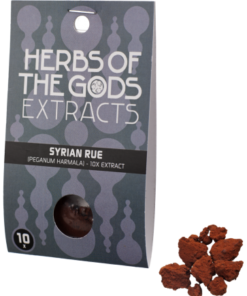
Syrian Rue Extract — Peganum harmala
Syrian Rue (Peganum harmala) is a plant associated with traditional botanical practices across parts of North Africa, the Middle East and Central Asia.
Its seeds and extracts are frequently discussed in ethnobotanical literature because the plant contains naturally occurring beta-carboline alkaloids.
Because concentrated preparations can differ substantially from raw botanical material, product information should be reviewed carefully before ordering. Syrian Rue may also be subject to specific restrictions depending on local law.
Customers taking medication should be particularly cautious with botanicals that may have pharmacological activity and should seek appropriate professional advice before use.
Dream Herb Extract — Calea zacatechichi
Dream Herb (Calea zacatechichi) is a plant associated with traditional Mexican ethnobotanical practices and has attracted interest among botanical collectors.
Our collection may include concentrated Dream Herb preparations, such as 10x extracts, depending on current stock. Check the product listing for the exact botanical identity, extract ratio, weight and product classification.
African Dream Herb Extract — Entada rheedii
African Dream Herb (Entada rheedii) is a large tropical vine found in parts of Africa and Asia. Its distinctive seeds have a notable place in African ethnobotanical traditions.
Concentrated preparations may be offered in extract formats. Always check the individual listing for the exact product specifications and intended classification.
Damiana Extract — Turnera diffusa
Damiana (Turnera diffusa) is a small aromatic shrub native to parts of the Americas and has a long history of traditional botanical use.
Damiana extracts may be supplied in concentrated formats such as 20x preparations. The concentration designation should always be interpreted according to the specific manufacturer's product information.
Passion Flower Extract — Passiflora incarnata
Passion Flower (Passiflora incarnata) is a flowering plant widely recognised for its distinctive flowers and established history in herbal traditions.
Our collection may include concentrated Passion Flower extracts. Product pages should be checked for the precise extract ratio, weight, ingredients and current availability.
Muira Puama Extract — Ptychopetalum olacoides
Muira Puama (Ptychopetalum olacoides) is a tropical South American botanical that has attracted considerable interest in traditional herbal and ethnobotanical contexts.
Extract products may be available in concentrated powder formats. Always review the product information for the exact botanical name, concentration, quantity and recommended product use.
Other Botanical Extracts
Our wider collection may include a range of less commonly encountered botanical extracts, including:
- Red Kwao Krua — Butea superba
- Maconha Brava — Zornia latifolia
- Bay Bean — Canavalia maritima
- Mexican Tarragon — Tagetes lucida
- Sinicuichi — Heimia salicifolia
- Sakae Naa — Combretum quadrangulare
These plants come from different botanical families and geographical regions, meaning their chemistry, traditional uses and regulatory status can vary considerably.
Extract Strengths, Ratios & Concentrations
Extract products can be described using terms such as 10x, 15x, 20x, 25x or 50x, while liquid products may use ratios such as 15:1.
These designations are product-specific and should not automatically be interpreted as a precise measure of biological activity or potency. Different manufacturers can use different production and standardisation methods.
For accurate comparison, check the manufacturer's description and product specifications rather than assuming that two products with the same numerical designation are chemically identical.
Powder Extracts vs Liquid Tinctures
| Feature | Powder Extract | Liquid Tincture |
|---|---|---|
| Format | Dry powder | Liquid preparation |
| Typical measurement | Grams | Millilitres |
| Storage | Usually stored dry | Follow product-specific instructions |
| Product concentration | May be expressed as an extract ratio or multiplier | May be expressed as a ratio or concentration |
| Best comparison point | Species, weight and extract specifications | Species, volume and extract specifications |
The exact characteristics of every product depend on its formulation and manufacturer. Always use the individual product page as the primary reference.
How to Choose an Extract or Tincture
1. Identify the Botanical Species
Start by checking the Latin botanical name. Common names can refer to different plants, so scientific identification provides greater precision.
2. Check the Extract Ratio
If the product uses an extract ratio or concentration designation, review exactly how it is described by the supplier.
3. Compare the Quantity
Powdered extracts are commonly sold by weight, while tinctures are generally supplied by liquid volume. Compare equivalent measurements when evaluating products.
4. Review the Ingredients
Check whether the product contains only the botanical extract or includes other ingredients, particularly in liquid preparations.
5. Check the Product Classification
Determine whether the product is classified as a botanical product, food supplement, collector item or another category. Regulatory requirements can depend on classification.
6. Read the Product Instructions
Always follow the instructions provided for the specific product and do not assume that instructions for one extract apply to another.
7. Check Local Regulations
Some botanical species and concentrated extracts may be restricted in particular jurisdictions. Verify the current rules applicable to your location before ordering internationally.
Quality & Product Information
We aim to provide clear information so customers can compare botanical extracts and tinctures more easily. Depending on the individual product, information may include:
- Common name
- Latin botanical name
- Plant family
- Plant part used
- Extract ratio or concentration
- Net weight or liquid volume
- Ingredients
- Product format
- Origin or botanical background
- Storage recommendations
- Supplier information
- Current availability
Always read the complete product description before purchasing.
Botanical Extracts & Responsible Product Information
Botanical extracts can be considerably more concentrated than ordinary plant material. Natural origin does not automatically mean that an extract is risk-free or suitable for every person.
Some botanicals can interact with medicines or other substances. If you take prescription medication, have an underlying health condition, are pregnant or breastfeeding, or are uncertain about a particular ingredient, consult an appropriately qualified healthcare professional before using unfamiliar botanical products.
Traditional use should not automatically be interpreted as evidence of modern medical effectiveness or safety.
Extracts, Tinctures & EU Health Claims
If an extract or tincture is marketed as a food or food supplement in the European Union, applicable food legislation and health-claim requirements must be considered. EU rules require nutrition and health claims to be clear, accurate and supported by the applicable regulatory framework.
The EU framework also distinguishes botanical substances from other supplement ingredients, and the use of botanicals in food supplements can be affected by national rules.
For this reason, our category information focuses on botanical identity, product characteristics, extract formats and general educational information rather than unsupported medical claims.
Legal Considerations for Botanical Extracts
The legal status of botanical extracts and tinctures can differ significantly between countries. A plant that is permitted in one jurisdiction may be restricted in another, and concentrated extracts can sometimes be regulated differently from raw botanical material. Before ordering internationally, check:
- Whether the botanical species is permitted in your country.
- Whether concentrated extracts are subject to additional restrictions.
- Whether importation is permitted.
- Whether the product is recognised as a food or food supplement.
- Whether specific ingredients are restricted or controlled.
- Whether customs or other import requirements apply.
Do not assume that online availability guarantees that a product can legally be imported, possessed or used in your jurisdiction.
Why Shop Extracts and Tinctures?
Wide Botanical Selection
Explore extracts and tinctures derived from a diverse range of plants and traditional botanical sources.
Multiple Product Formats
Choose between powdered extracts, liquid tinctures and other concentrated botanical preparations depending on current availability.
Clear Botanical Identification
Product listings identify the botanical species and provide relevant product information wherever available.
Convenient Quantities
Compare products by weight, volume, extract ratio and other relevant specifications.
Explore Unusual Botanicals
Discover less commonly encountered plants from different geographical regions and ethnobotanical traditions.
Extracts and Tinctures FAQ
What are botanical extracts?
Botanical extracts are concentrated preparations produced from plant material using an extraction process. Their composition depends on the plant, plant part, extraction method and concentration.
What is a tincture?
A tincture is a liquid botanical preparation made by extracting plant material into a liquid medium. The composition and concentration vary between products.
What does 10x, 20x or 50x extract mean?
These terms are product-specific concentration or extraction designations. They should not automatically be interpreted as a standardized measurement of biological potency. Always check the manufacturer's explanation.
Are extracts stronger than raw herbs?
Extracts are designed to concentrate components of the original botanical material, but the actual concentration depends on the extraction and manufacturing process. Do not assume that a numerical extract ratio directly predicts biological effects.
What is Blue Lotus extract?
Blue Lotus extract is a concentrated preparation derived from Nymphaea caerulea. Depending on the product, it may be supplied as a dry extract or liquid tincture.
What is Syrian Rue extract?
Syrian Rue extract is a concentrated preparation derived from Peganum harmala. Because the plant contains biologically active alkaloids, customers should carefully review product information and applicable restrictions.
What is Dream Herb extract?
Dream Herb generally refers to Calea zacatechichi, a plant associated with traditional Mexican ethnobotanical practices. Extract products may be offered in concentrated formats.
What is Damiana extract?
Damiana extract is derived from Turnera diffusa, an aromatic plant native to parts of the Americas with a history of traditional botanical use.
How should I choose between an extract and a tincture?
Compare the botanical species, concentration or ratio, quantity, ingredients, product format, storage requirements and applicable product instructions.
Are botanical extracts safe?
Safety depends on the specific plant, preparation, concentration and individual circumstances. Natural origin does not guarantee safety, and some botanicals can interact with medicines.
Can I use botanical extracts with medication?
Not necessarily. Certain botanicals can interact with medicines or other substances. Consult a qualified healthcare professional if you take medication or have health concerns.
Can I order botanical extracts internationally?
International orders can be affected by customs, import, food-safety and product-specific regulations. Always confirm that the product can legally be imported into your destination country.
How should extracts and tinctures be stored?
Storage requirements vary by product. Follow the instructions provided on the individual product page and packaging.
Explore Extracts and Tinctures
Explore the Magic Mushrooms Shop Extracts and Tinctures collection to discover selected botanical extracts, concentrated plant preparations and liquid tinctures.
From Blue Lotus and Syrian Rue to Dream Herb, African Dream Herb, Damiana, Passion Flower, Muira Puama and other unusual botanicals, our collection offers a convenient way to explore concentrated plant products from diverse botanical traditions.
Read each product page carefully for the exact botanical identity, extract ratio, quantity, ingredients, format and current availability. Before ordering internationally, always verify the regulations applicable to your location. Browse our Extracts and Tinctures collection and discover selected botanical preparations for informed and lawful use.