

Avery’s Albino Liquid Culture Syringe
€19,95
Avery’s Albino is a true albino isolation of the Cambodian Psilocybe cubensis landrace, stabilised from a spontaneous mutation by Shroomery cultivators Albinous White and Robert Young around 2019.
Because its spores are clear and transparent — leaving no visible print — a liquid culture syringe is the practical format for working with this strain.
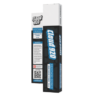
Cloud920 supplies Avery’s Albino as a 10cc sterile syringe of live mycelium-in-suspension under the Heritage Series, lab-verified for purity and viability.
Potency is average for Psilocybe cubensis (Oakland Hyphae Cup: 0.64% total tryptamines average, peak 0.86%). Intermediate cultivation difficulty. Sold for microscopy and mycological research.
Avery’s Albino — Liquid Culture Overview
Avery’s Albino is a distinctive Psilocybe cubensis cultivar recognised for its striking white appearance, compact fruiting bodies and pronounced blue bruising. It is generally described within community strain references as an albino isolation associated with Cambodian genetics, developed by Albinous White and Robert Young.
Its completely pale phenotype makes Avery’s Albino visually different from conventional cubensis varieties. Rather than the familiar brown, caramel or golden colouring seen in many classic cultivars, Avery’s Albino is characterised by a predominantly white appearance across the cap, stem and gill structures.
For research collections, Cloud920 presents this lineage as a liquid culture rather than relying on traditional spore-print formats. This provides a convenient way of maintaining an isolated mycelial culture for microscopy and mycological research.
Origin & Genetics
The commonly cited history of Avery’s Albino places its development within the online Psilocybe cubensis cultivation community. Community taxonomic references attribute the isolation to Albinous White and Robert Young, describing it as an albino isolation from Cambodian P. cubensis.
The name is traditionally associated with Avery, the daughter of Albinous White. This detail has remained part of the cultivar’s community history and is one of the reasons the name became established.
Avery’s Albino should also be distinguished from similarly named cultivars. In particular, Albino A+ is generally described as leucistic rather than a true albino, while APE belongs to the Penis Envy lineage and has a separate documented development history.
Because strain histories in the P. cubensis community are often based on breeder records, forum documentation and shared cultivation histories rather than formal scientific publications, individual claims about exact parentage and dates should be treated accordingly.
Why Liquid Culture Is a Practical Format
Avery’s Albino is particularly interesting from a microscopy perspective because its pigmentation differs substantially from conventional cubensis. Community descriptions commonly associate the cultivar with very pale or transparent-looking spores, making conventional spore-print collection considerably less straightforward than with pigmented varieties.
Liquid culture offers a different format: instead of relying on dormant spores that must germinate, a liquid culture contains established mycelium suspended in a sterile nutrient medium. For legitimate mycological research, this makes the material easier to examine and work with as an isolated culture.
The Cloud920 format is therefore designed around living mycelial material rather than a multi-spore mixture, allowing researchers to work with a defined culture for microscopy and comparative mycology.
Morphology & Appearance
Avery’s Albino is recognised by several distinctive visual characteristics:
- Overall colour: Predominantly white, with little to no conventional brown or golden pigmentation.
- Cap: Rounded to convex, generally retaining a compact profile as it develops.
- Stem: Relatively thick and sturdy compared with many standard cubensis forms.
- Bruising: Blue bruising can become pronounced following handling or physical damage.
- Fruiting pattern: Community observations frequently describe clustered fruiting and compact groups.
- Spores: Commonly described as extremely pale or transparent-looking, making deposits difficult to observe without suitable microscopy equipment.
The combination of an almost entirely white appearance and robust, compact morphology makes Avery’s Albino easy to distinguish visually from many traditional P. cubensis cultivars.
What Sets Avery’s Albino Apart?
The defining feature is its albino phenotype. This is important because the terms “albino” and “leucistic” are frequently used interchangeably in commercial strain descriptions even though they can describe different pigmentation traits.
Avery’s Albino is widely catalogued as an albino Cambodian isolation, whereas Albino A+ is generally identified as a leucistic cultivar. Community taxonomy resources specifically list Avery’s Albino as an albino Cambodian isolation attributed to Albinous White and Robert Young.
Its appearance is therefore the main attraction for comparative microscopy and mycological collections. The bright white fruiting phenotype provides a useful contrast when examined alongside conventional pigmented cubensis cultures.
Potency Information
Potency claims surrounding individual P. cubensis cultivars should be treated carefully. Published scientific literature notes substantial variability between cultivars and samples, while available strain databases often rely on community or limited laboratory datasets rather than comprehensive controlled testing.
For that reason, Avery’s Albino should not be marketed with a guaranteed potency figure unless supported by batch-specific laboratory analysis. Growing conditions, genetics, sample selection and analytical methodology can all affect measured alkaloid concentrations.
What’s Included
Each Cloud920 Avery’s Albino liquid culture package contains:
- 1 × 10 cc sterile syringe containing Avery’s Albino mycelial culture
- 1 × sterile needle
- 1 × alcohol preparation swab
- 1 × product information/instruction insert
The culture is prepared for microscopy and mycological research, with production controls intended to support culture viability and cleanliness.
Liquid Culture Characteristics
Liquid culture differs fundamentally from a conventional spore suspension.
With spores, dormant reproductive cells must germinate before developing into mycelium. Liquid culture already contains mycelial growth suspended in a suitable sterile medium.
For research purposes, this distinction means:
- Established mycelium: The material contains mycelial culture rather than dormant spores.
- Defined genetics: An isolated culture can provide greater consistency than a mixed multi-spore sample.
- Convenient examination: Mycelial development can be observed and assessed under suitable laboratory conditions.
- Research flexibility: Liquid culture can be incorporated into microscopy and comparative mycology workflows where legally appropriate.
- Strain-specific study: Avery’s Albino can be examined alongside other P. cubensis lineages to compare morphology and growth characteristics.
Cultivation & Research Notes
Because this material concerns a psilocybin-producing species, cultivation may be restricted or prohibited depending on the jurisdiction. Cloud920 products should therefore be used only for lawful microscopy and mycological research.
For legitimate research handling, maintain appropriate sterile laboratory conditions and follow the applicable institutional procedures for fungal cultures. Avoid treating community cultivation parameters as guaranteed outcomes, as growth characteristics can vary substantially between cultures and environments.
The distinctive white mycelium of albino cultivars can also make visual assessment different from conventional pigmented strains. Proper laboratory controls and contamination-screening procedures are therefore important when examining any fungal culture.
Storage & Handling
For best culture preservation, keep the syringe refrigerated according to the storage instructions supplied with the product. Protect it from direct light, excessive heat and freezing conditions.
General handling principles include:
- Keep the syringe in its original packaging when not in use.
- Avoid repeated exposure to temperature fluctuations.
- Do not freeze the culture.
- Follow the manufacturer’s stated shelf-life guidance.
- Use appropriate sterile handling procedures during research work.
- Dispose of compromised or visibly contaminated material according to applicable laboratory and local requirements.
Microscopy & Mycological Research Only
Cloud920 Avery’s Albino liquid culture is supplied for microscopy and mycological research purposes only.
Psilocybe cubensis contains psychoactive compounds, and legislation governing its cultivation, possession and handling varies considerably throughout Europe. The fact that spores or cultures may be treated differently under the law in some jurisdictions does not mean that cultivation or possession of mature fungi is permitted.
Always check the current legislation applicable in your country before purchasing, possessing or using any fungal research material.
Frequently Asked Questions
What is Avery’s Albino?
Avery’s Albino is a Psilocybe cubensis cultivar generally described in community strain references as an albino isolation associated with Cambodian genetics. The commonly cited attribution is to Albinous White and Robert Young.
Is Avery’s Albino the same as Albino A+?
No. Although both names refer to very pale P. cubensis cultivars, community references generally distinguish Avery’s Albino from Albino A+. Avery’s Albino is described as an albino Cambodian isolation, while Albino A+ is generally classified as leucistic.
Why is Avery’s Albino supplied as liquid culture?
Its very pale pigmentation and reported transparent or near-transparent spores make traditional spore-print handling less convenient. A liquid culture instead provides established mycelium in suspension, making it a practical format for lawful mycological research.
What does Avery’s Albino look like?
The cultivar is recognised for predominantly white fruiting structures, rounded caps, relatively thick stems and pronounced blue bruising. Community photographs and descriptions consistently highlight its distinctive pale appearance.
Does Avery’s Albino have a guaranteed potency?
No. Individual P. cubensis samples can vary considerably, and a cultivar name alone cannot guarantee a particular alkaloid concentration. Reliable potency claims should be based on appropriate laboratory testing of the specific sample or batch.
How should the culture be stored?
Keep the syringe refrigerated in accordance with the product’s supplied storage instructions. Protect it from direct light, excessive heat and freezing temperatures, and follow the stated use-by or shelf-life information.
Is this product legal throughout the EU?
No single rule applies uniformly across every EU member state. Regulations concerning Psilocybe cultures, spores, cultivation and psychoactive mushrooms differ between countries and can change over time. Check the current rules in your jurisdiction before ordering or using the product.
What is the intended use of the product?
The product is supplied strictly for microscopy and mycological research. Users are responsible for ensuring that their possession and use of the culture comply with all applicable local laws and regulations.
Be the first to review “Avery’s Albino Liquid Culture Syringe”
Related products

Liquid Culture Syringes

Liquid Culture Syringes

Liquid Culture Syringes

Liquid Culture Syringes

Liquid Culture Syringes

Liquid Culture Syringes

Liquid Culture Syringes
Liquid Culture Syringes
Reviews
There are no reviews yet.