
About the Reishi Liquid Culture
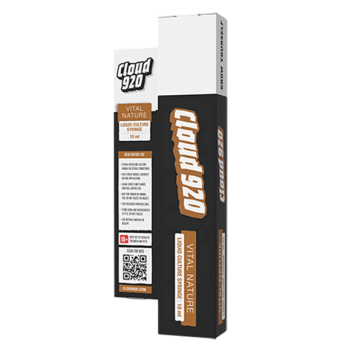
The Cloud920 Reishi liquid culture contains an isolate of Ganoderma lingzhi, a hardwood-growing polypore renowned for its distinctive lacquered, kidney-shaped fruiting bodies. Its glossy red to orange-brown surface and unusual woody structure make Reishi one of the most recognisable species in the world of gourmet and functional mushrooms.
This Ganoderma lingzhi culture forms part of Cloud920’s Vital Nature range, which focuses on functional mushroom species of traditional, culinary and mycological interest.
Produced under controlled laboratory conditions, the culture is supplied in a 10 cc syringe and undergoes quality checks for viability, sterility and consistent morphology. It complements other species in the Cloud920 functional mushroom collection, including Lion’s Mane. Explore the full Cloud920 liquid culture range for the available selection.
Origin and Traditional History of Ganoderma lingzhi
Ganoderma lingzhi has a long-standing place in East Asian cultural and botanical traditions. The species naturally develops on hardwood, including the stumps, roots and trunks of broadleaf trees such as oak, maple, plum and willow.
Known as lingzhi in Chinese traditions and Reishi in Japan, the mushroom has historically been associated with longevity and traditional herbal practices. References to lingzhi can be found in classical Chinese literature dating back many centuries.
From the twentieth century onwards, Japanese cultivation techniques helped establish Reishi as an important commercially cultivated mushroom. Modern growers now produce Ganoderma lingzhi on hardwood-based substrates across numerous regions, while researchers continue to investigate its unusual growth characteristics and biology.
Its slow-growing, woody fruiting bodies and distinctive lacquer-like appearance have also made it a notable species within wood-decay mycology.
What Makes This Ganoderma lingzhi Culture Distinctive?
Reishi is particularly easy to recognise once mature. Instead of producing a soft cap and stem, it forms a firm, woody conk, characteristic of bracket fungi.
The upper surface develops a smooth, glossy finish and can display changing shades of cream, yellow, orange, red and deep chestnut as the fruiting body matures. The underside is generally pale and covered with tiny pores rather than gills.
Mature specimens can develop broad, fan-shaped or kidney-like forms, sometimes reaching approximately 10–30 cm across. A short lateral stem may also develop, depending on cultivation conditions.
The mycelium behaves differently from faster-growing gourmet mushrooms. Ganoderma lingzhi tends to colonise hardwood substrates gradually, producing creamy-white to pale yellow, string-like growth with a rhizomorphic appearance.
Cultivators interested in comparing different hardwood-loving functional mushrooms can also explore the Cloud920 Lion’s Mane liquid culture, which prefers similar substrate materials but produces a very different fruiting structure.
What You Receive
Each syringe contains 10 cc of Cloud920 Ganoderma lingzhi liquid culture and is supplied with a sterile needle.
The culture contains live Reishi mycelium suspended in a prepared nutrient medium. Production takes place under controlled laboratory conditions, with batch-level quality checks covering viability, sterility and morphological consistency.
Each syringe is sealed and labelled with its relevant batch and shelf-life information.
Additional equipment and consumables for working with functional mushroom cultures are available through the laboratory supplies section.
Cultivation Guidelines
For cultivation purposes, Cloud920 recommends approximately 2–3 cc for a small grain bag, 3–4 cc for a medium bag and 4–5 cc for a large bag.
Ganoderma lingzhi is a wood-decomposing species that generally performs well on hardwood-based substrates. Oak, beech and alder are among the hardwoods commonly used for cultivation.
Supplemented sawdust blocks, often prepared with hardwood sawdust and a suitable bran supplement, are widely used for fruiting. Grain such as rye, wheat or millet can be used to prepare spawn before transferring the colonised material to a hardwood block.
During colonisation, temperatures around 24–28°C are commonly used. Fruiting can then be encouraged at approximately 20–24°C, alongside suitable humidity and increased fresh-air exchange.
Reishi is naturally slow-growing, so complete colonisation of a hardwood block may require approximately 4–8 weeks, depending on the substrate and environmental conditions.
The appearance of antler-like growth can occur when carbon dioxide levels remain elevated. Adjusting fresh-air exchange can encourage development towards the characteristic capped form.
Keep the liquid culture refrigerated at 2–8°C, upright and protected from direct light until required. Do not freeze.
For Mycological Research and Home Cultivation
This Ganoderma lingzhi liquid culture is intended for mycological research and home cultivation of this non-psilocybin mushroom species.
Ganoderma lingzhi does not produce psilocybin and is not considered a psychoactive mushroom. It is a wood-decaying polypore widely cultivated for culinary, functional and research purposes.
Before cultivation, always check the regulations applicable to mushroom culture and cultivation in your country or region.
Frequently Asked Questions
What does Reishi mycelium look like during colonisation?
Ganoderma lingzhi mycelium commonly appears creamy-white to pale yellow and develops long, cord-like strands as it advances through hardwood substrate.
Compared with the fluffy growth often associated with Hericium erinaceus, Reishi can appear more fibrous and structured, frequently developing a flatter profile against the substrate. Small amounts of yellowish metabolites may occasionally appear around active areas of colonisation and can be a normal feature of the species.
How does liquid culture differ from a spore syringe?
A spore syringe contains spores that must germinate before mycelial growth begins. Liquid culture already contains living mycelium suspended in a nutrient medium, providing an established starting culture.
How should the Cloud920 syringe be stored?
Store the syringe at 2–8°C, preferably upright and in its original protective packaging. Keep it away from direct light and avoid freezing. Use it within the shelf life indicated on the product label.
Is Reishi suitable for cultivation?
Ganoderma lingzhi is a non-psilocybin wood-decay mushroom and does not contain controlled psychoactive alkaloids. Nevertheless, mushroom cultivation regulations differ between countries, so always check the rules applicable in your location before beginning cultivation.
Is this Cloud920 culture laboratory verified?
Cloud920 cultures are produced under controlled laboratory conditions. Each batch undergoes quality-control checks for factors including viability, sterility and morphological consistency before being filled, sealed and labelled.
Be the first to review “Reishi liquid culture syringe | 10ml”
Related products
Buy Magic Truffles
Liquid Culture Syringes
Liquid Culture Syringes
Functional Mushrooms
Liquid Culture Syringes
Liquid Culture Syringes
Functional Mushrooms
Liquid Culture Syringes
Reviews
There are no reviews yet.