
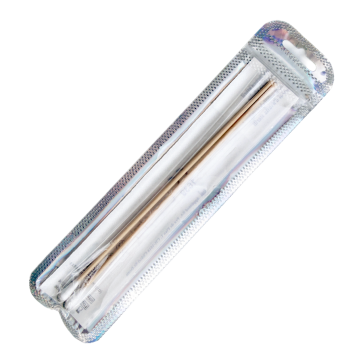
True Albino Teacher — Spore Swab Cloud920®
€16,50
True Albino Teacher spore swabs give you direct access to one of the most talked-about mutations in modern cubensis mycology.
TAT emerged as a spontaneous albino variant from a Golden Teacher tub — and unlike most “albino” cubes, it produces genuinely transparent spores with zero pigmentation.
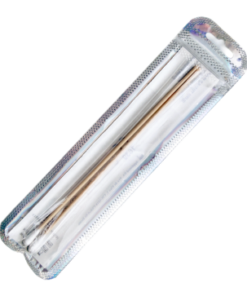
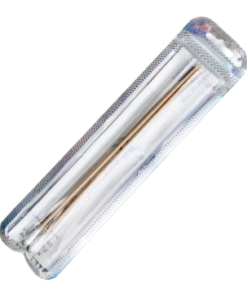
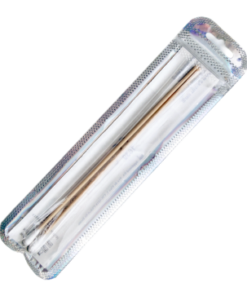
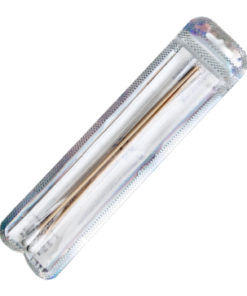
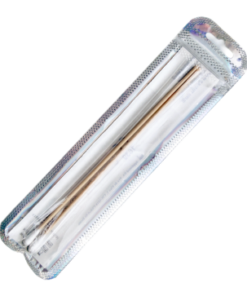
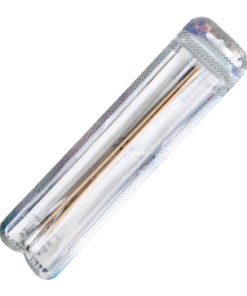
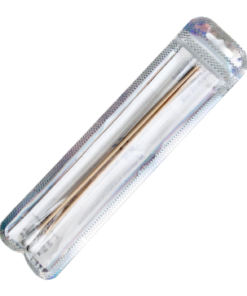
Two individually sealed swabs, ready for agar work and microscopy.
True Albino Teacher — Origin & Genetics
Cloud920® Genetics: Heritage Series
True Albino Teacher, commonly abbreviated to TAT, is a distinctive albino line of Psilocybe cubensis with a particularly interesting place in modern cubensis genetics.
Community accounts generally credit mycologist Jik Fibs with identifying and stabilising the original TAT phenotype from Golden Teacher-related material. A contemporary community taxonomy reference likewise lists OG True Albino Teacher (TAT) as an albino Golden Teacher isolation attributed to Jik Fibs.
The defining characteristic is its extremely limited pigmentation. Unlike leucistic varieties, which may retain pigmentation in certain tissues, TAT is recognised within the community for its strikingly white appearance and transparent or nearly transparent spores. This unusual combination has made the original TAT line an important reference point for later albino genetics.
The TAT lineage has subsequently been associated with several well-known varieties, including Yeti, Ghost and Jack Frost, making the original TAT an interesting starting point for anyone studying the development of modern albino cubensis genetics.
Why a Spore Swab Is Suitable for TAT
The lack of visible pigmentation presents an obvious challenge when examining TAT spores.
Conventional pigmented P. cubensis varieties can leave a readily visible purple-brown deposit, making it relatively easy to identify a spore print. Albino cubensis lines are different: their spores may be transparent and therefore extremely difficult to see against a conventional white surface.
A sterile spore swab provides a compact research format for maintaining TAT spore material without depending on a clearly visible print. For microscopy collections, this can make the material easier to catalogue and handle.
The transparent nature of albino cubensis spores has also been discussed extensively within mycology communities, where researchers have noted how different they appear from the pigmented spores of conventional cubensis varieties.
Morphology & Spore Characteristics
- Species: Psilocybe cubensis
- Lineage: Albino Golden Teacher-related genetics
- Cap: Typically white to off-white, with a convex to broadly expanded profile. Mature specimens can develop upward-curving margins and a distinctive pale appearance.
- Stem: White throughout, ranging from medium to relatively thick depending on the specimen and genetic expression.
- Bruising: Bluish bruising may develop following physical contact.
- Spores: Transparent or extremely lightly pigmented, making them difficult to distinguish against pale surfaces.
- Spore production: Generally described as limited in visible form because transparent spores can be difficult to detect without suitable microscopy.
Under appropriate magnification, TAT provides an especially interesting contrast with conventional Golden Teacher material. Rather than seeing the dense purple-brown spore structures associated with a typical pigmented cubensis, researchers may encounter much less visually prominent spores.
This makes TAT particularly valuable as a comparative specimen when examining pigmentation and spore morphology across different P. cubensis varieties.
What Makes True Albino Teacher Different?
The principal distinction is the combination of white fruiting morphology and transparent spores.
TAT should also be distinguished from varieties that are marketed as albino but are technically leucistic. In leucistic forms, pigmentation may be reduced without being completely absent. True albino lines are characterised by a much more extensive loss of pigmentation.
The TAT lineage has become particularly influential within the modern cubensis community. A number of subsequent varieties have been associated with TAT genetics, giving the original line significance beyond its unusual appearance.
A published Australian Government factsheet on P. cubensis also identifies True Albino Teacher among cultivars derived from or associated with the Golden Teacher population.
What’s in the Pack?
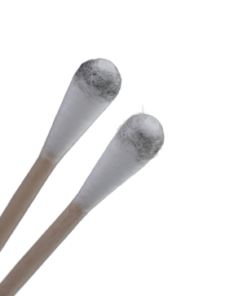
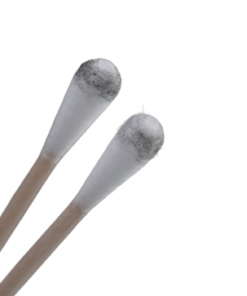
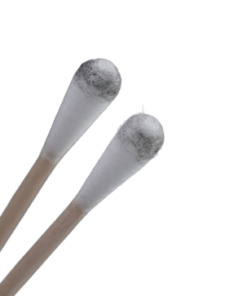
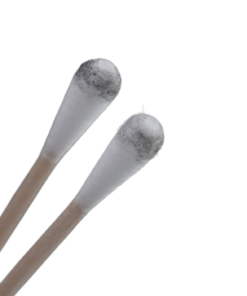
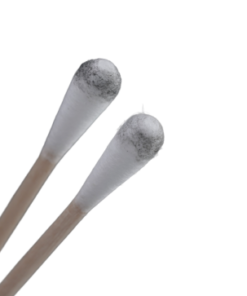
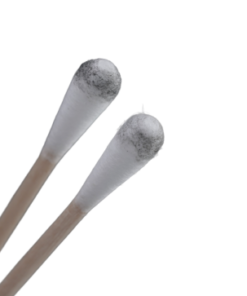
- 2 × sterile cotton spore swabs, individually sealed
- Each swab contains Psilocybe cubensis True Albino Teacher spore material
- Compact format suitable for microscopy and mycological research
Spore swabs are supplied exclusively for microscopy, taxonomic research and educational purposes. They are not intended for human consumption.
Microscopy Characteristics
True Albino Teacher can make an interesting addition to a comparative fungal microscopy collection.
Researchers may examine:
- Spore visibility and pigmentation
- General spore morphology
- Ellipsoid characteristics
- Germ-pore features
- Differences between albino and pigmented cubensis material
- Morphological differences between TAT and Golden Teacher
- Phenotypic variation between related albino lines
One of the most useful comparisons is between TAT and a conventional Golden Teacher specimen. The two are associated with the same broader Golden Teacher genetic background, yet their pigmentation characteristics can be dramatically different.
This provides a useful visual example of how genetic variation can influence observable fungal characteristics.
TAT and the Modern Albino Family
The significance of True Albino Teacher extends beyond the original phenotype.
The line is commonly cited in community discussions and genetic catalogues as a parent or foundation for several later albino varieties. The broader TAT family includes names such as Yeti, Ghost and Jack Frost, each of which developed its own distinctive characteristics.
This makes OG TAT an interesting reference point for researchers who want to understand relationships between different albino cubensis varieties.
Rather than examining each variety independently, comparing related TAT lines can provide a broader view of phenotype expression and genetic selection within cultivated P. cubensis.
Recommended Research Equipment
For permitted microscopy and educational work, useful laboratory equipment can include:
- Microscope slides and coverslips — for preparing specimens for observation
- Petri dishes — for appropriate laboratory research applications
- Agar agar — where legally permitted and appropriate for scientific work
- Light Malt Extract (LME) — commonly used as a laboratory medium component
- Parafilm — for appropriate laboratory sealing applications
- Microscope — suitable for fungal microscopy and comparative observation
Always use laboratory materials according to their intended purpose and applicable local regulations.
Research & Handling Notes
TAT spore material should be treated as a research specimen and clearly labelled with the variety name and relevant acquisition information.
Because the spores may be transparent, conventional visual inspection is not always sufficient to determine the amount of material present. Appropriate microscopy and careful specimen documentation can therefore be useful when studying this lineage.
Keep research samples protected from excessive heat, moisture and direct light, and maintain accurate records if specimens form part of a larger reference collection.
Storage
Keep True Albino Teacher spore swabs in their original sealed packaging and follow the supplier’s recommended storage conditions.
Store specimens away from excessive heat, moisture and direct light. Keep the packaging sealed until the material is required for permitted microscopy or research purposes.
Once a swab has been opened, follow appropriate laboratory hygiene and specimen-handling procedures.
Frequently Asked Questions
What is True Albino Teacher?
True Albino Teacher, or TAT, is a distinctive albino line of Psilocybe cubensis associated with Golden Teacher genetics. It is recognised particularly for its pale fruiting morphology and transparent spores.
Who developed True Albino Teacher?
Community sources generally credit Jik Fibs with the isolation and stabilisation of the original TAT line. A community taxonomy reference specifically lists OG TAT as an albino Golden Teacher isolation by Jik Fibs.
Are TAT spores white?
They are generally described as transparent or nearly transparent, rather than the purple-brown colour associated with ordinary pigmented cubensis spores. This is why they can be extremely difficult to see on conventional surfaces.
Is TAT the same as a leucistic Golden Teacher?
No. TAT is generally described as a true albino line, whereas leucistic Golden Teacher variants retain some pigmentation. The distinction is particularly apparent when comparing spore pigmentation.
Why are TAT spore swabs useful for microscopy?
Transparent spores can be difficult to observe in conventional prints. A sealed swab provides a compact way to maintain research material for permitted microscopy and comparative study.
Which varieties are associated with TAT?
The broader TAT family is commonly associated with varieties including Yeti, Ghost and Jack Frost, although the precise genetic relationships between community-named cultivars can vary between sources.
Are these products intended for consumption?
No. These specimens are intended exclusively for microscopy, mycology research and educational purposes and must not be consumed.
Are mushroom spores legal in the EU?
The legal status of mushroom spores, mycelium and related materials varies between EU Member States and can depend on the species and intended use. Check the current legislation applicable in your country before purchasing, possessing or using these materials.
Explore True Albino Teacher
True Albino Teacher offers a distinctive research specimen for anyone interested in fungal morphology, albino genetics and comparative microscopy. Its unusual pigmentation, transparent spores and connection to the wider TAT genetic family make it a particularly interesting addition to a legitimate mycology reference collection.
For microscopy, mycology research and educational purposes only. Not for human consumption.
Be the first to review “True Albino Teacher — Spore Swab Cloud920®”
Related products
Spore Swabs
Spore Swabs
Spore Swabs
Spore Swabs
Spore Swabs
Spore Swabs
Spore Swabs
Reviews
There are no reviews yet.