
Yeti — Spore Swab Cloud920®
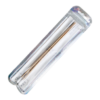
€16,50
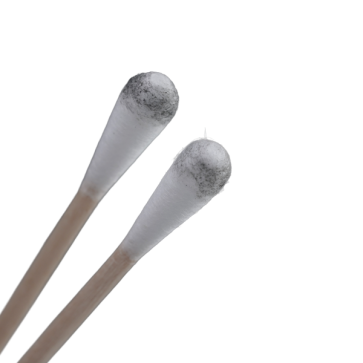
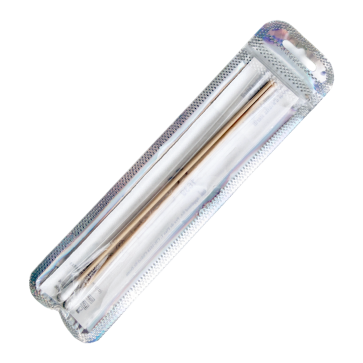
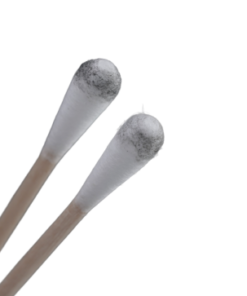
The Yeti spore swab gives you access to one of the most visually distinctive isolates in the True Albino Teacher family. Developed by Jik Fibs from the original TAT line, Yeti produces ghostly white fruits with thick, stubby stems and a bruising reaction so intense it borders on electric blue. Two individually sealed swabs, ready for agar work and comparative microscopy.
Yeti — Origin & Genetics
Cloud920® Genetics: TAT Lineage
Yeti is a distinctive isolation within the True Albino Teacher (TAT) family of Psilocybe cubensis. The TAT Syndicate’s own family tree places Yeti directly alongside the original OG True Albino Teacher and identifies the original TAT as the source of Yeti and several other subsequent lines.
Rather than being a conventional cross between unrelated cubensis varieties, Yeti is generally described as a TAT isolation, selected for its characteristic appearance and unusual morphology. Community taxonomy references likewise list Yeti as a TAT isolation attributed to Jik Fibs.
The result is a recognisable member of the TAT family, distinguished by a pale appearance, compact proportions and a strongly individual fruiting morphology. Over time, further projects have been developed from Yeti, including Yeti 2.0, Nutcracker, King Yeti, Yoda’s Yeti and Deep End, according to the TAT Syndicate family database.
Why a Spore Swab Is Suitable for Yeti
Yeti’s TAT heritage makes it particularly interesting for microscopy collections focused on albino cubensis genetics.
Unlike heavily pigmented cubensis varieties, TAT-related material can produce spore deposits that are visually less obvious. This makes conventional spore-print examination less straightforward and gives sterile swab formats a practical role in maintaining small research specimens.
A pre-loaded spore swab provides a compact, individually sealed format for microscopy and comparative mycology. It can also be catalogued alongside other TAT-family specimens, allowing researchers to compare related genetic lines and their visible characteristics.
Morphology & Spore Characteristics
- Species: Psilocybe cubensis, TAT-lineage isolation
- Cap: Typically pale white to cream, ranging from convex to broadly expanded. Individual specimens can display distinctive irregular or textured margins.
- Stem: Characteristically compact and robust, with a substantial appearance compared with many conventional cubensis varieties.
- Bruising: Bluish bruising may develop following physical handling.
- Spores: Associated with the general purple-brown spore morphology of P. cubensis, although visible deposits can vary between specimens and collections.
- Spore production: Can be less visually obvious than in heavily pigmented, prolific-printing cubensis varieties.
Under appropriate microscopy, Yeti can be compared with both its TAT parent line and conventional pigmented cubensis varieties. This makes it particularly useful for studying variation in fungal pigmentation, spore visibility and overall morphology.
A three-way comparison between Golden Teacher, OG TAT and Yeti can provide an interesting visual progression from conventional pigmentation through albino expression to a more specialised TAT isolation.
What Makes Yeti Different from Other TAT Isolates?
The TAT family contains a number of recognised lines, including Ghost, Yeti and True Albino Melmak. The TAT Syndicate maintains a dedicated family tree documenting these relationships and subsequent projects.
Yeti stands out primarily because of its compact, stocky morphology. Its appearance can differ noticeably from the more conventional proportions associated with standard cubensis varieties.
The line has also become a source for further genetic projects. The TAT Syndicate lists several Yeti-derived isolations and crosses, including Yeti 2.0, Nutcracker, King, Deep End and several Yeti-based crosses.
This makes Yeti more than simply another named cubensis variety: it represents an important branch of the modern TAT family tree.
What’s in the Pack?
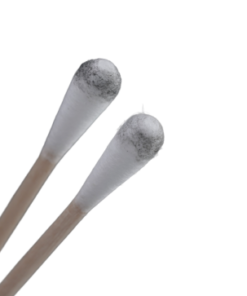
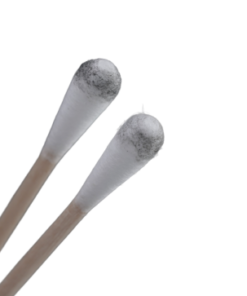
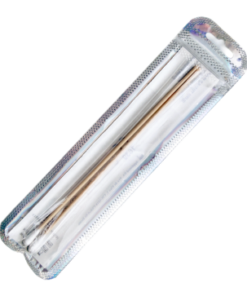
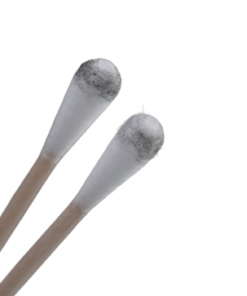
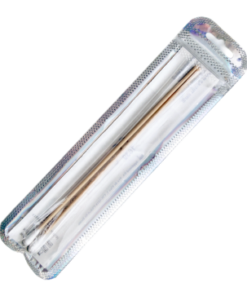
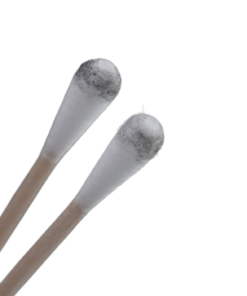
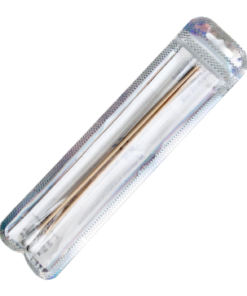
- 2 × sterile cotton spore swabs, individually sealed
- Each swab contains Psilocybe cubensis Yeti spore material
- Compact format suitable for microscopy and mycological research
Spore swabs are supplied exclusively for microscopy, taxonomic research and educational purposes. They are not intended for human consumption.
Microscopy Applications
Yeti can be particularly interesting as part of a comparative fungal microscopy collection.
Researchers may examine:
- General spore morphology
- Spore pigmentation and visibility
- Ellipsoid spore characteristics
- Germ-pore features
- Differences between TAT-family specimens
- Differences between albino and conventionally pigmented cubensis
- Morphological variation between related isolates
Because Yeti belongs to the TAT lineage, it can also be studied alongside OG TAT and other recognised TAT-family specimens.
The TAT Syndicate maintains a dedicated Yeti database and family-tree documentation, making it possible to explore the broader relationships between Yeti and later derivatives.
Yeti Within the TAT Family
The original OG True Albino Teacher is identified by the TAT Syndicate as the starting point for several subsequent isolations, including Yeti and Ghost.
Yeti subsequently became a genetic source for additional projects. The TAT family database records Yeti 2.0 as a later project intended to emphasise larger fruits, with a further isolation named Deep End. It also records several Yeti-based crosses, including Nanook, Golden Wookie and multiple Yeti × JMF projects.
This documented family structure makes Yeti an interesting specimen for anyone researching how named cubensis lines develop through isolation and subsequent genetic projects.
Recommended Research Equipment
For permitted microscopy and educational applications, useful laboratory equipment can include:
- Microscope slides and coverslips — for preparing specimens for observation
- Petri dishes — for appropriate laboratory research applications
- Agar agar — where legally permitted and appropriate for scientific work
- Light Malt Extract (LME) — a commonly used laboratory medium component
- Parafilm — for suitable laboratory sealing applications
- Microscope — suitable for fungal microscopy and comparative observation
All laboratory materials should be used only for their intended research purposes and in accordance with applicable legislation.
Research & Handling Notes
Treat Yeti spore material as a research specimen and maintain clear identification records.
For a comparative collection, record the variety or isolation name, acquisition details and relevant observations. This is particularly useful when examining several members of the TAT family, where similarly named lines can have different histories.
Keep sealed specimens protected from excessive heat, moisture and direct light. Follow the supplier’s handling recommendations and all applicable local regulations.
Storage
Store Yeti spore swabs in their original sealed packaging according to the supplier’s recommended conditions.
Keep specimens away from excessive heat, moisture and direct light, and maintain the packaging seal until the material is required for permitted microscopy or research use.
Once opened, follow appropriate laboratory hygiene and specimen-handling procedures.
Frequently Asked Questions
What is Yeti?
Yeti is a recognised Psilocybe cubensis isolation belonging to the True Albino Teacher (TAT) family. The TAT Syndicate identifies Yeti as one of the lines originating from OG True Albino Teacher.
Is Yeti a hybrid?
Yeti is generally described as a TAT isolation, rather than a conventional hybrid. Community taxonomy references also list Yeti as a TAT isolation attributed to Jik Fibs.
What is the relationship between Yeti and TAT?
OG TAT is identified as the source of Yeti within the TAT Syndicate’s official family tree.
What varieties are related to Yeti?
The TAT Syndicate records several subsequent Yeti projects, including Yeti 2.0, Nutcracker, King, Deep End, Golden Wookie and various Yeti-based crosses.
Why are Yeti swabs useful for microscopy?
A sterile swab provides a compact, sealed format for maintaining spore material for permitted microscopy and comparative mycology, particularly when studying TAT-related specimens.
Are these products intended for consumption?
No. These specimens are intended exclusively for microscopy, mycology research and educational purposes and must not be consumed.
Are mushroom spores legal in the EU?
The legal status of mushroom spores, mycelium and related materials differs between EU Member States and may depend on the species and intended use. Check the current legislation applicable in your country before purchasing, possessing or using these materials.
Explore Yeti
Yeti represents an important branch of the modern TAT genetic family. Its distinctive morphology, connection to OG True Albino Teacher and extensive history of subsequent isolations make it an interesting specimen for comparative mycology and microscopy collections.
For microscopy, mycology research and educational purposes only. Not for human consumption.
Be the first to review “Yeti — Spore Swab Cloud920®”
Related products
Spore Swabs
Spore Swabs
Spore Swabs
Spore Swabs
Spore Swabs
Spore Swabs
Spore Swabs
Reviews
There are no reviews yet.