
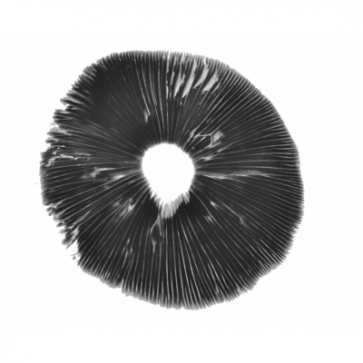
Amazonas Spore Print
€22,50
The Amazonas is a legendary Psilocybe cubensis strain believed to originate from the tropical depths of the Amazon rainforest. It is known for producing tall, meaty fruiting bodies with broad golden-brown caps that fade to lighter tones at maturity.
Amazonas is one of the oldest and most historically significant cubensis lines in circulation, making it a prized addition to any serious collection.
Amazonas Spore Print — A Classic Cubensis Lineage with a Rich History
The Amazonas strain is a long-established Psilocybe cubensis variety with a distinctive place in the history of modern mushroom culture. Traditionally associated with the warm, humid environments of the Amazon basin, Amazonas is recognised for its tall stature, substantial fruit bodies and classic tropical appearance. Its enduring presence in spore collections has made it a familiar name among microscopy enthusiasts and collectors.
A Lineage with Strong Historical Connections
Amazonas is often described as one of the earlier cubensis varieties to gain widespread circulation. Accounts of its background frequently connect the lineage with ethnobotanical exploration in the Amazon region during the 1970s, with some historical narratives linking it to the work surrounding Terence and Dennis McKenna.
As interest in Psilocybe cubensis expanded, early spore suppliers helped preserve and circulate the Amazonas name. Over the years, it became established as a recognisable classic, giving modern collectors an opportunity to explore a lineage associated with the formative years of cubensis culture.
Distinctive Amazonas Morphology
Amazonas has a bold and unmistakable appearance that reflects its tropical heritage:
- Cap: Broad and rounded, ranging from golden-brown and caramel tones to lighter tan shades. Young caps are generally convex and may feature a noticeable central prominence.
- Stem: Tall, sturdy and pale white to off-white, giving the fruit body a particularly substantial profile.
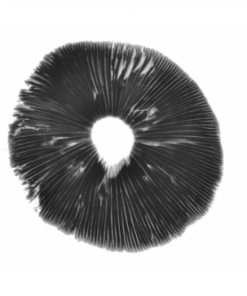
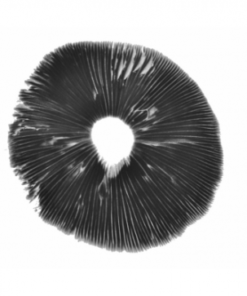
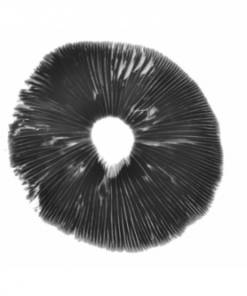
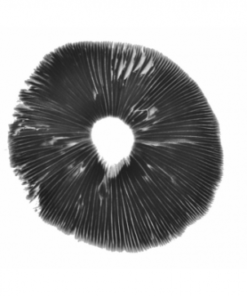
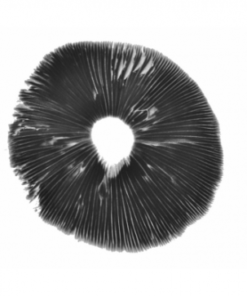
- Spore print: Characteristically dark purple-brown, consistent with typical Psilocybe cubensis morphology.
- Overall appearance: Large, robust fruit bodies with a classic tropical cubensis silhouette and impressive proportions.
A Reference Point for Collectors
For enthusiasts building a diverse spore library, Amazonas offers more than an attractive specimen. Its long-standing reputation and traditional appearance make it a useful reference when comparing established cubensis varieties with newer or more unusual selections.
The combination of its historical associations, pronounced size and recognisable golden-brown colouring gives Amazonas a timeless quality. It represents an important chapter in the development of the modern cubensis collecting community.
Suitable for Microscopy and Spore Collections
Amazonas is particularly appealing to collectors interested in studying the visual and microscopic characteristics of Psilocybe cubensis. Its contrasting pigmentation, substantial morphology and clearly visible spore prints provide several features of interest for comparative microscopy.
As with any spore specimen, characteristics can vary between individual samples and prints. Environmental conditions and genetic variation may also influence the appearance of fruiting bodies, so individual specimens should not necessarily be expected to look identical.
How to Use a Spore Print
If you are new to working with spore prints, a dedicated guide can explain the basics of handling, preparing and storing a print for microscopy or collection purposes.
Why Add Amazonas to Your Collection?
If you are developing a varied Psilocybe cubensis spore collection, Amazonas provides a strong example of a traditional, well-known lineage. Its combination of historical significance, tall fruit-body structure and warm golden-brown colouring gives it a distinctive identity within a broader collection.
Whether your interest lies in mushroom morphology, microscopy or the history of cubensis varieties, Amazonas offers an appealing connection to the early development of modern Psilocybe culture.
Be the first to review “Amazonas Spore Print”
Related products
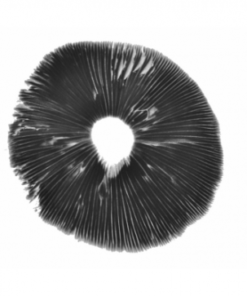
Spore Prints
Spore Prints
Spore Prints
Spore Prints
Spore Prints
Spore Prints
Spore Prints
Spore Prints
Reviews
There are no reviews yet.