
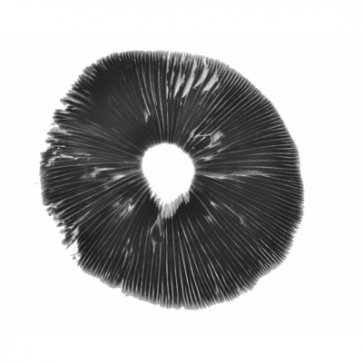
Escondido Mexico psilocybe cubensis spore print
€22,50
The Escondido is a wild-collected Psilocybe cubensis strain from Puerto Escondido on the Pacific coast of Oaxaca, Mexico — a region deeply intertwined with centuries-old sacred mushroom traditions.
It produces attractive fruiting bodies with rich caramel to reddish-brown caps and slender, elegant stems. Collectors value the Escondido for its genuine Oaxacan provenance, fast colonisation and its connection to the spiritual heartland of Mexican mushroom culture.
Escondido Mexico Psilocybe Cubensis Spore Print
Escondido is a wild-associated Psilocybe cubensis variety connected with the Puerto Escondido region of Oaxaca, Mexico. Its name comes from the well-known Pacific coastal town, while its broader story is rooted in one of Mexico’s most important regions for traditional mushroom culture.
Recognised for warm reddish-brown colouring, varied cap shapes and vigorous characteristics, Escondido offers collectors an interesting combination of natural provenance and distinctive morphology.
From the Oaxacan Pacific Coast
Puerto Escondido lies on the Pacific coastline of Oaxaca, a state with a particularly important place in the cultural history of psilocybin-containing fungi. Indigenous communities in Oaxaca have maintained traditional relationships with sacred mushrooms for generations, including ceremonial practices associated with spiritual reflection and healing.
Oaxaca also became internationally significant during the twentieth century through the work of ethnomycologist R. Gordon Wasson and the renowned Mazatec healer María Sabina. Wasson’s participation in a traditional ceremony in the 1950s helped introduce Western audiences to mushroom traditions that had existed in the region for centuries.
The Escondido name is associated with cubensis material from the warm subtropical environments around Puerto Escondido. Its coastal background gives the variety an appealing connection to the natural landscape of southern Mexico and the wider mushroom heritage of Oaxaca.
Visual Characteristics of Escondido
Escondido has a particularly variable appearance, reflecting its wild-associated background.
- Cap: Often medium to large, with colours ranging from rich caramel and reddish-brown to lighter tan shades as the fruiting body matures. Young caps may appear bell-shaped or conical before expanding, sometimes developing a noticeable central prominence.
- Stem: Generally slender to moderately robust and pale white to yellowish-white. Blue bruising may develop following physical damage or handling.
- Overall appearance: Warm, earthy and naturally variable. Differences in cap shape and colour between individual specimens contribute to its distinctive wild-type character.
Vigorous Growth and Natural Variation
Within enthusiast communities, Escondido is often associated with vigorous development and productive fruiting. Its reported adaptability across different growing environments has contributed to its popularity among collectors interested in traditional cubensis varieties.
One of its most appealing characteristics is morphological diversity. Individual specimens from the same group can display noticeably different cap profiles, ranging from narrow and conical forms to broader, flatter shapes. This variation provides an interesting subject for comparative microscopy and phenotype observation.
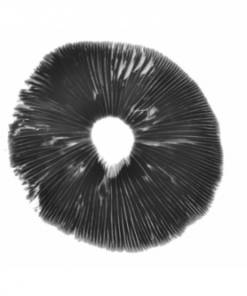
Spore deposits are typically described as dark brown to purple-brown, producing strongly contrasting prints that are readily visible during examination.
As with other multi-spore cubensis varieties, individual characteristics can vary considerably. Appearance and growth behaviour should therefore be considered representative rather than guaranteed.
How to Use a Spore Print
If you are unfamiliar with spore prints, a dedicated guide can provide general information on examining, preserving and storing prints for microscopy and collection purposes.
Why Add Escondido to Your Collection?
Escondido brings together several features that make it appealing to a diverse Psilocybe cubensis collection: a connection with southern Mexico, distinctive warm colouration and noticeable morphological variation.
Its association with the Puerto Escondido region also gives the variety an engaging geographical identity, linking it to the wider cultural and natural heritage of Oaxaca. For collectors who value provenance and visual diversity alongside traditional cubensis characteristics, Escondido offers plenty of interest.
With its coastal Mexican background, reddish-brown colouring and naturally varied morphology, Escondido is a distinctive addition for anyone interested in the diversity and history of Psilocybe cubensis.
Be the first to review “Escondido Mexico psilocybe cubensis spore print”
Related products
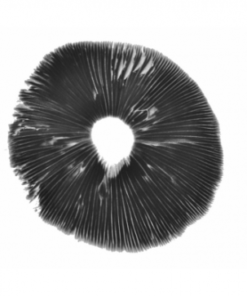
Spore Prints
Spore Prints
Spore Prints
Spore Prints
Spore Prints
Spore Prints
Spore Prints
Spore Prints
Reviews
There are no reviews yet.