
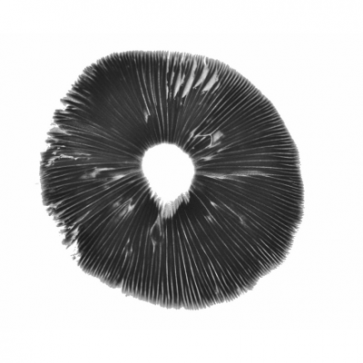
Mexican Psilocybe Cubensis Spore Print
€22,50
The Mexican Dutch King is a classic Psilocybe cubensis strain with Mexican roots that was refined and popularised in Amsterdam’s legendary smartshop scene. It produces large, golden-brown fruiting bodies with thick stems and a distinctive, robust appearance.
Collectors value the Mexican Dutch King for its unique cross-cultural heritage and its status as one of the best-selling cubensis varieties in the Netherlands.
Mexican Dutch King — A Crossroads of Mexican Heritage and Dutch Cultivation
Mexican Dutch King, commonly shortened to MDK, is a recognised Psilocybe cubensis variety with a name that reflects its unusual journey. Its story connects Mexican wild-type genetics with the cultivation culture that developed in the Netherlands.
After Mexican material reached Dutch cultivators, the lineage became associated with Amsterdam and gained considerable recognition within the European smartshop scene.
Its combination of substantial fruiting bodies, warm golden colouring and long-standing popularity has helped Mexican Dutch King become a familiar name among collectors of cubensis genetics.
From Mexican Origins to Amsterdam
The lineage is generally associated with Psilocybe cubensis specimens originating in Mexico, where the species occurs naturally in warm, subtropical environments. The exact provenance of the original collection is not well documented, so many details surrounding its early history remain uncertain.
At some point, Mexican genetics reached the Netherlands, where cultivators selected and propagated the variety for the emerging commercial mushroom market. It became associated with the name Mexican Dutch King, reflecting both its Mexican background and its strong connection with Dutch mushroom culture.
The variety subsequently gained recognition among European enthusiasts and became one of the better-known names associated with the Dutch smartshop era. Even as regulations surrounding fresh psilocybin mushrooms changed in the Netherlands, MDK continued to circulate internationally as a recognised cubensis lineage.
Visual Characteristics of Mexican Dutch King
MDK is known for its substantial, traditional cubensis appearance and warm colouration.
- Cap: Large and broad, beginning in shades of brown before developing golden-brown, tan or yellowish tones with maturity. Young caps are convex and generally become flatter as they develop.
- Stem: Tall and relatively thick, usually white to pale yellowish in colour. A noticeable veil remnant may remain around the upper stem, while blue bruising can develop following handling.
- Overall appearance: Large, robust and visually imposing, with broad caps and substantial stems that give the variety a particularly commanding profile.
Vigorous and Well Established
Mexican Dutch King has long been appreciated within enthusiast communities for its reputation for vigorous development and substantial fruiting. It is commonly described as a relatively forgiving variety with dependable characteristics, helping explain its historical popularity among cultivators.
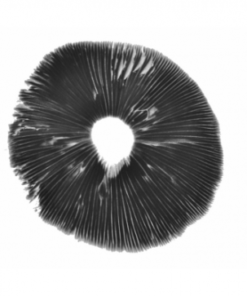
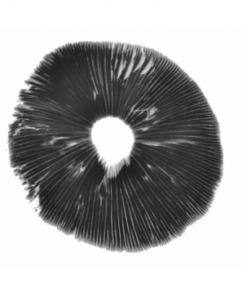
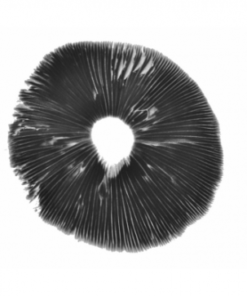
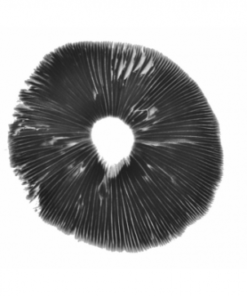
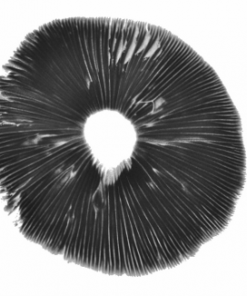
Its dark purple-brown spore deposits are another recognisable feature, producing clearly visible prints suitable for microscopy and collection purposes.
As with other Psilocybe cubensis varieties, however, characteristics can vary between specimens and cultures. Reported growth rates, fruit size and other traits should therefore be viewed as general observations rather than guaranteed results.
How to Use a Spore Print
If you are new to handling spore prints, a dedicated guide can explain general approaches to examining, preserving and storing a print for microscopy or collection purposes.
Why Add Mexican Dutch King to Your Collection?
Mexican Dutch King occupies an interesting position in Psilocybe cubensis history. Its name reflects the meeting of two important influences: the long-standing presence of cubensis in Mexico and the Netherlands’ significant role in the development of modern European mushroom culture.
With its large golden-brown caps, sturdy growth profile and distinctive cultural backstory, MDK offers more than a conventional-looking cubensis variety. It is particularly appealing to collectors interested in the history of mushroom genetics and the evolution of European cultivation culture.
For a collection that combines classic morphology with an intriguing transatlantic history, Mexican Dutch King is a distinctive and recognisable choice.
Be the first to review “Mexican Psilocybe Cubensis Spore Print”
Related products
Spore Prints
Spore Prints
Spore Prints
Spore Prints
Spore Prints
Spore Prints
Spore Prints
Spore Prints
Reviews
There are no reviews yet.