
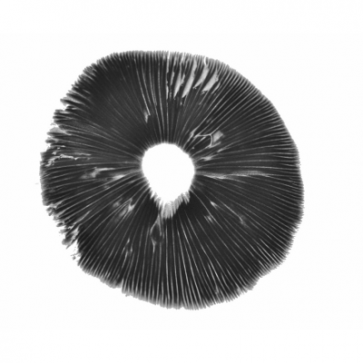
Mexican Spore Print
€22,50
The Mexican is the original, unmodified Psilocybe cubensis wild type from the subtropical highlands of Mexico — the strain that started it all.
With its modest size, warm brown caps and gentle, balanced character, it represents the pure, foundational cubensis genetics that all other Mexican-origin strains were eventually derived from.
This is the closest you can get to the mushrooms that were used in sacred Mazatec ceremonies centuries before the Western world discovered them.
Mexican Spore Print — The Wild-Type Foundation of Modern Psilocybe cubensis
The Mexican strain occupies a special place in the history of Psilocybe cubensis. Rather than being associated with a modern laboratory selection or a commercial breeding programme, it represents a traditional Mexican wild-type lineage that has become an important reference point in the history of cubensis culture.
For collectors interested in provenance, natural morphology and the origins of modern mushroom research, Mexican offers something particularly appealing: a connection to the earliest Western documentation of psilocybin-containing mushrooms.
The Beginning of a Modern Mushroom Story
Psilocybe cubensis has long occurred naturally in warm, humid regions of Mexico, including areas of Oaxaca, Chiapas and Veracruz. Indigenous communities in these regions developed longstanding cultural and ceremonial relationships with psychoactive fungi, particularly within the traditions of the Mazatec people of Oaxaca.
Western awareness increased significantly during the 1950s. In 1955, ethnomycologist R. Gordon Wasson travelled to Huautla de Jiménez in Oaxaca, where he participated in a traditional velada led by the renowned healer María Sabina. Wasson’s subsequent writing helped introduce mushroom traditions from Mexico to a much wider international audience.
French mycologist Roger Heim later studied and documented specimens associated with these encounters. Over time, Mexican cubensis material became part of the foundation from which numerous named varieties and cultivated lines emerged.
Mexican Compared with Other Mexican-Associated Varieties
Several Psilocybe cubensis varieties are associated with Mexico, but they do not necessarily represent the same lineage or collection history.
- Mexican: A traditional wild-type reference associated with Mexican cubensis populations. Its natural appearance and relatively modest morphology distinguish it from highly selected modern lines.
- Mazatapec: Associated specifically with the Sierra Mazateca region of Oaxaca and its important cultural mushroom heritage. It is recognised for its distinctive morphology and measured development.
- Escondido: Connected with the Puerto Escondido area on Oaxaca’s Pacific coast and known for greater morphological variation and warm reddish-brown colouring.
- Mexican Dutch King: A Mexican-associated lineage that became established in the Netherlands and was subsequently selected and propagated within the European cultivation scene.
This makes the Mexican variety particularly interesting as a historical reference rather than simply another modern commercial selection.
Visual Characteristics of Mexican
The Mexican wild-type profile is generally more understated than that of many selectively developed varieties.
- Cap: Small to medium-sized, commonly ranging from cinnamon-brown to light tan. Young caps are convex and generally become broader and flatter as they mature.
- Stem: Slender and proportionate, usually white to pale tan, with blue bruising potentially appearing after physical damage.
- Overall appearance: Compact, natural and relatively unrefined-looking, reflecting its association with wild-type genetics rather than intensive selection for unusually large fruiting bodies.
A Natural Reference for Collectors
Mexican may not be defined by exceptionally large fruiting bodies or unusual pigmentation, but its importance lies elsewhere. It represents the kind of traditional cubensis morphology that makes an excellent comparison point when examining more specialised varieties.
Its historical associations with Mexican mushroom traditions also give it considerable cultural interest. Dark purple-brown spore deposits provide another characteristic feature for microscopy and comparative observation.
As with other multi-spore samples, morphology can vary between individual specimens, so descriptions should be understood as general characteristics rather than fixed guarantees.
How to Use a Spore Print
If you are new to spore prints, a dedicated guide can provide general information about examining, preserving and storing prints for microscopy or collection purposes.
Why Add Mexican to Your Collection?
For anyone building a broad Psilocybe cubensis collection, Mexican offers an important historical and geographical perspective. Its connection with Mexico’s longstanding mushroom traditions and the early development of Western ethnomycological interest gives it an identity that goes beyond appearance alone.
Rather than competing with highly selected varieties on size or unusual morphology, Mexican represents natural character, historical provenance and traditional wild-type diversity.
Whether you are interested in the history of Psilocybe cubensis, comparative microscopy or simply want a classic Mexican-associated lineage in your collection, Mexican is a meaningful reference variety that helps put the wider world of cubensis genetics into context.
Be the first to review “Mexican Spore Print”
Related products
Spore Prints
Spore Prints
Spore Prints
Spore Prints
Spore Prints
Spore Prints
Spore Prints
Spore Prints
Reviews
There are no reviews yet.